

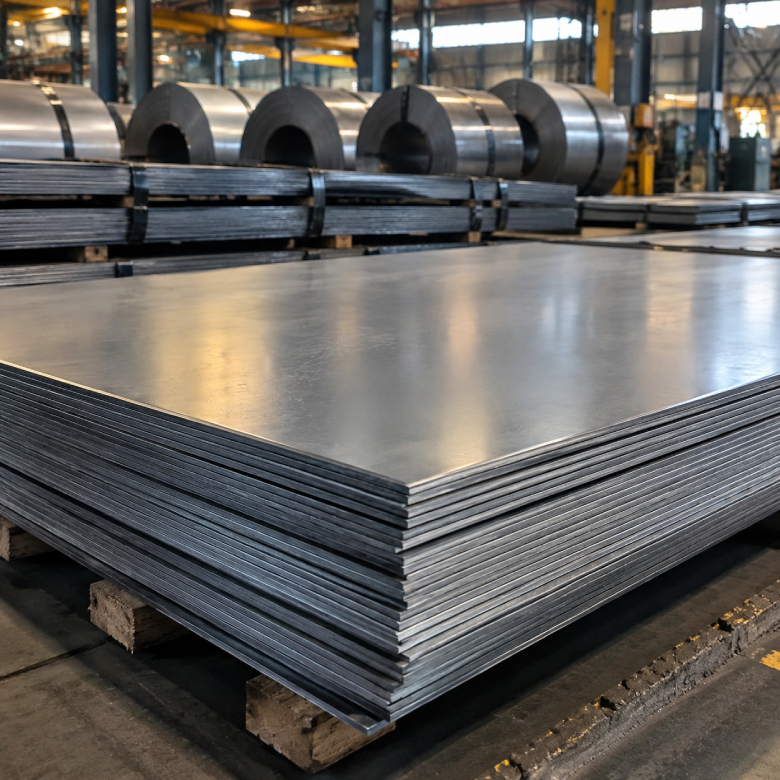
Key Factors Affecting the Price of Alloy Steel Plates
If you have ever requested a quotation for the same type of steel from different manufacturers or suppliers, you have probably encountered different prices. These price differences do not always indicate overpricing or underpricing; various factors such as steel grade, chemical composition, production standards, quality, dimensions, thickness, manufacturing process, factory inventory, and transportation costs can influence the final price.
This issue is particularly important for products such as alloy steel plates, as even slight differences in alloying elements or production standards can affect mechanical properties and, consequently, the product price.
In this article, we examine why steel product prices vary among different manufacturers and what factors should be considered when purchasing steel.
What Factors Cause Differences in Steel Prices?
The price of a steel product is not determined solely by its weight. Technical specifications and market conditions also play an important role in pricing.
The most important factors include:
- Steel type and grade
- Chemical composition and alloying elements
- Production standards
- Quality and mechanical properties
- Product thickness and dimensions
- Manufacturing process
- Manufacturer and production brand
- Supply availability and inventory levels
- Transportation costs
- Steel market conditions
Therefore, two products that appear visually similar may have different prices due to differences in their technical specifications.
The Impact of Steel Type on Pricing
One of the most important factors affecting steel prices is the type of steel. Steel products are classified into different categories based on their chemical composition and applications.
Carbon steel, alloy steel, tool steel, and specialty steels each have different properties and applications.
For example, in the production of alloy steel plates, elements such as chromium, nickel, molybdenum, manganese, and silicon are added. The amount and combination of these elements can significantly change the steel’s performance characteristics.
Therefore, steel plates cannot be compared only based on the general product name “steel plate”; their technical specifications must also be considered.
Why Can Alloy Steel Plates Have a Higher Price?
Alloy steel plates are produced to achieve specific properties such as higher strength, improved hardness, wear resistance, heat resistance, and enhanced performance under demanding operating conditions.
The production of these products may require more precise control of chemical composition, heat treatment processes, and quality inspections.
As a result, the price of alloy steel plates depends on factors such as:
- Steel grade
- Percentage of alloying elements
- Production standard
- Thickness
- Supply conditions
Therefore, comparing prices without considering grade and technical specifications may lead to selecting an unsuitable product.
The Effect of Production Standards on Steel Prices
Production standards are another important factor influencing steel prices.
Steel products may be manufactured and tested according to different standards. These standards define requirements such as:
- Chemical composition
- Mechanical properties
- Dimensions and tolerances
- Testing methods
- Heat treatment conditions
Therefore, when requesting a quotation, it is important not to provide only the product name. The required grade, standard, thickness, and dimensions should also be specified.
How Do Thickness and Dimensions Affect Steel Prices?
Even if two products are made from the same steel grade, differences in thickness and dimensions can result in different prices.
For steel plates, thickness, width, and length are among the key product specifications.
Some dimensions may not be readily available in the market and may require special production or customized orders.
Therefore, accurate price comparison requires identical dimensional specifications.
The Impact of Manufacturing Process on Steel Pricing
The manufacturing process can significantly affect the final price of steel.
Steel production involves several stages, including:
- Melting
- Casting
- Rolling
- Heat treatment and finishing processes (for certain products)
The production method and level of quality control at each stage can influence the final characteristics of the product.
As a result, two visually similar products may differ significantly in terms of production process and technical performance.
How Does the Manufacturer Affect Steel Prices?
The manufacturer is another important factor influencing steel prices.
Production costs, factory equipment, production capacity, raw material quality, applied standards, and supply conditions may vary between manufacturers.
However, selecting steel should not be based solely on the manufacturer’s name. Technical specifications, quality certificates, standards, and delivery conditions should also be evaluated.
Market Supply and Availability
Like many industrial commodities, steel prices are influenced by supply and demand conditions.
If a specific steel grade or dimension is limited in availability, its price may differ from products with higher market availability.
Local market conditions can also affect final prices. For example, the price of steel plates in Kerman may depend not only on the base product price but also on supplier inventory, sourcing conditions, and transportation costs.
Transportation Costs and Their Impact on Steel Prices
Geographical location plays an important role in the final price of steel products.
Steel produced in one region may require transportation to another city. Loading, transportation, unloading costs, and the distance between the supplier and the project location can influence the final price.
Therefore, when evaluating steel plate prices in Kerman, it is important to determine whether the quoted price refers to:
- Factory delivery price
- Supplier warehouse price
- Customer delivery price
This factor can cause the same product with a similar base price to be offered at different final prices in different locations.
Why Comparing Prices Without Comparing Technical Specifications Is Incorrect
Assume two suppliers provide different prices for the same steel plate.
Before choosing the lower price, the following specifications should be compared:
| Specification | Items to Check |
| Product Type | Steel, steel plate, alloy steel plate |
| Grade | Exact steel grade |
| Standard | Manufacturing standard |
| Thickness | Actual plate thickness |
| Dimensions | Length and width |
| Chemical Composition | Alloying element percentages |
| Mechanical Properties | Strength, hardness, and other characteristics |
| Product Condition | New, stocked, or customized |
| Delivery Location | Factory, warehouse, or project site |
| Documentation | Quality certificate and material analysis (if required) |
No comment